Best AI Tools for Students in 2026
The best AI tools for students in 2026 include ChatGPT for explanations, Grammarly and QuillBot for revision, Notion AI for organization, Perplexity for research, Otter for lecture notes, and Canva or SlidesAI for presentations. The best choice depends on the task, your school’s AI policy, and whether you can verify the output.
This comparison covers 10 practical tools for high school and university students. We explain what each one does well, when it is useful, and what to check before relying on it. For tools focused specifically on revision and learning, see our best AI study tools comparison.
Best AI tools for students: quick comparison
| Student task | Recommended tool | Best use |
|---|---|---|
| Understanding a topic | ChatGPT | Explanations, examples, and practice questions |
| Revising a draft | Grammarly | Grammar, clarity, and tone feedback |
| Managing coursework | Notion AI | Notes, tasks, and project organization |
| Paraphrasing carefully | QuillBot | Exploring clearer wording during revision |
| Starting research | Perplexity AI | Finding source-linked research directions |
| Capturing lectures | Otter AI | Searchable transcripts with permission |
| Creating presentations | Tome, Canva, SlidesAI | Structuring and designing slides |
| Google-based workflows | Gemini | General assistance across study tasks |
How to choose an AI tool as a student
- Start with the task: research, revision, memorization, notes, or presentation design.
- Check the evidence: open sources and compare important claims with course material.
- Protect private data: do not upload personal, confidential, or restricted class information.
- Follow course rules: permitted study support is not always permitted assignment generation.
- Keep your own voice: edit deliberately and be able to explain everything you submit.

10 best AI tools for students compared
There are many AI tools for students available today, but not all of them are designed specifically for studying. Some tools focus on writing, others help with research, organization or presentations.
Below you can find some of the best AI tools that students currently use to improve productivity and simplify the learning process.
ChatGPT
ChatGPT is one of the most widely used AI tools for students because of its flexibility. The platform can answer questions, explain difficult concepts and generate summaries from long texts.
Many students use ChatGPT as a personal study assistant. For example, it can simplify complex subjects like physics, mathematics or history by explaining them step by step. This makes it easier to understand topics that might otherwise take hours to review.
Another common use is generating study material. Students often ask the tool to create practice questions, summaries or flashcards based on their notes. This can be particularly helpful during exam preparation.
Official website:
Visit ChatGPT official site
Grammarly
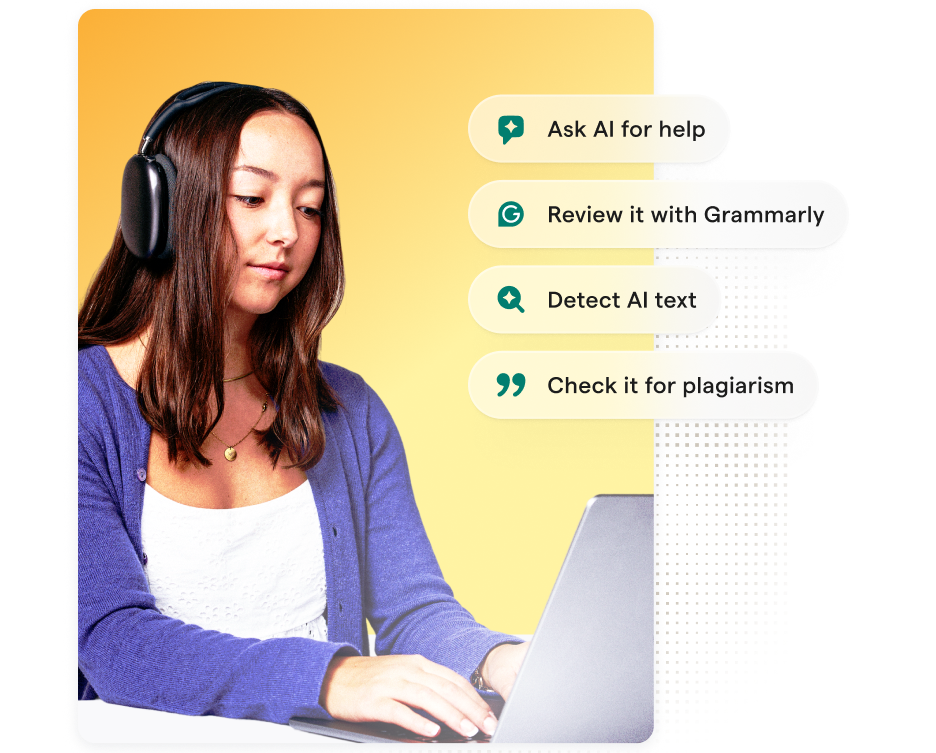
Grammarly is one of the most popular AI writing tools used by students around the world. It checks grammar, spelling and punctuation while also improving clarity and tone.
When writing essays, reports or assignments, Grammarly highlights mistakes and suggests improvements in real time. This helps students produce more polished and professional academic texts.
Another useful feature is its plagiarism detection tool. This allows students to verify that their work is original before submitting it to teachers or professors.
Official website
Visit Grammarly official site
Notion AI
Notion AI is an advanced productivity tool that combines note-taking, organization and artificial intelligence. Many students use it to manage their study materials, track assignments and organize projects.
The AI functions allow users to summarize notes, generate outlines for essays and quickly transform messy ideas into structured content. This makes it easier to plan research papers or presentations.
For students who prefer a single digital workspace, Notion AI can become a powerful hub where notes, tasks and study plans are all stored in one place.
Official website:
Visit Notion official site
QuillBot
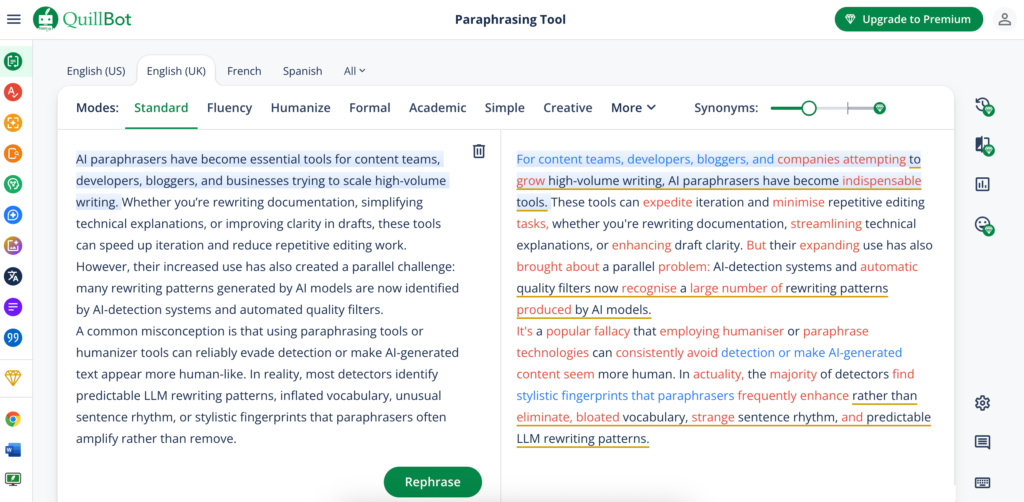
QuillBot is a well-known AI paraphrasing tool used by students who want to improve the clarity of their writing.
The platform can rewrite sentences while preserving the original meaning. This helps students avoid repetition and express ideas in different ways when writing essays or reports.
QuillBot also includes tools for summarizing texts and checking grammar. Because of this combination of features, it has become one of the most widely used AI study tools among students.
Official website:
Visit QuillBot official site
Perplexity AI
Perplexity AI is an AI-powered research assistant that helps students find information quickly. Instead of displaying a list of links like a traditional search engine, it generates clear answers supported by sources.
This feature makes it particularly useful when students need to understand a topic quickly or verify information for research assignments.
Because it cites the sources used to generate answers, Perplexity is often used by students who need reliable references when writing academic papers.
Official website
Visit Perplexity official site
Otter AI
Otter AI is a transcription tool that converts speech into written text. Students often use it during lectures to automatically record and transcribe what teachers say.
This allows them to review lessons later and focus on understanding the material instead of taking detailed notes in real time.
Otter AI can also generate summaries of conversations and meetings, making it useful for group study sessions or collaborative projects.
Official website:
Visit Otter official site

Tome AI
Tome AI helps students create presentations quickly using artificial intelligence. Instead of building slides manually, users can generate structured presentations by simply describing the topic.
The platform automatically produces slides with text, images and layout suggestions. Students can then edit and customize the presentation to match their needs.
For school projects or classroom presentations, Tome AI can significantly reduce preparation time.
Official website
Visit Tome official site
Canva Magic Write
Canva Magic Write is an AI writing assistant integrated into the Canva platform. It can generate text ideas, outlines and short content drafts.
Students often use Canva when preparing visual projects, posters or presentations. With Magic Write, they can also generate text content directly inside the design tool.
Because of this integration between design and writing, Canva has become one of the most useful AI tools for homework and school presentations.
Official website
https://www.canva.com
Google Gemini
Google Gemini is an advanced AI assistant developed by Google that helps students with research, writing and studying. It can explain complex topics, summarize articles and assist with brainstorming ideas for assignments.
Many students use Gemini when they need quick explanations or when researching new subjects. Because it integrates with Google services, it can also be useful when working with documents, notes and online sources.
Official website:
Visit Gemini official website
SlidesAI
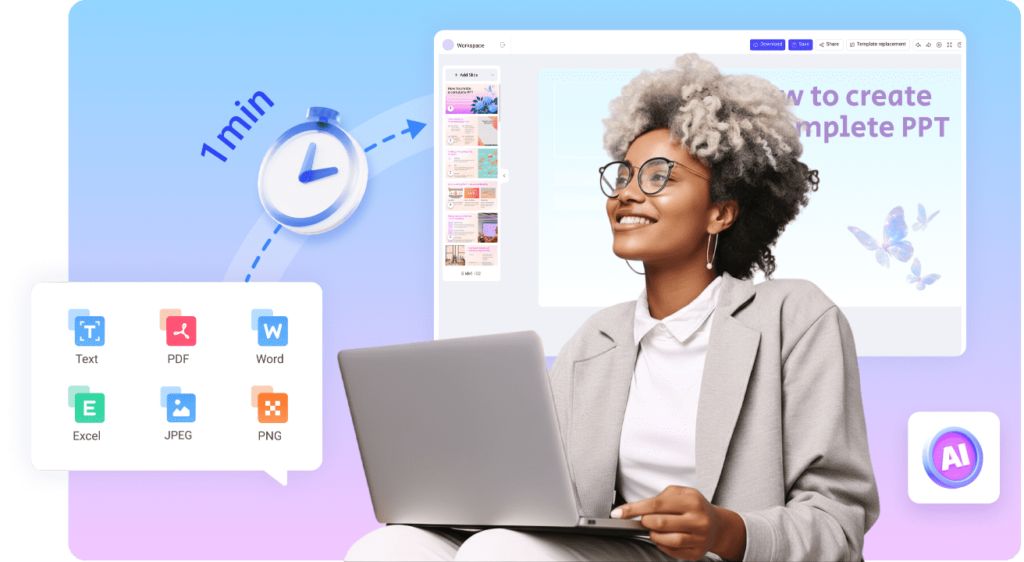
SlidesAI is an AI tool designed to automatically create presentations from text. Students simply paste their notes or a short summary of the topic and the platform generates a complete slide deck.
This is particularly useful for school presentations, group projects or classroom assignments where visual material is required. Instead of spending hours designing slides manually, students can generate a structured presentation in minutes.
Official website:
Visit SlideAI official site
If flashcards are your priority, compare the tools in our AI flashcard generator guide. If you need a repeatable revision workflow, follow our tutorial on how to create a study guide with AI.
FAQ – Best AI Tools for Students in 2026
What are the best AI tools for students in 2026?
Some of the most popular AI tools for students include ChatGPT, Grammarly, Notion AI, QuillBot and Perplexity. Each tool offers different features for writing, studying and research.
Are AI tools allowed in school?
Many schools allow AI tools as long as they are used responsibly. Students should always verify the information generated and follow their school’s academic integrity guidelines.
Are there free AI tools for students?
Yes. Several platforms such as ChatGPT, QuillBot and Canva offer free versions that students can use without paying.
Can AI help with homework?
AI tools can help students understand topics, summarize texts and organize study materials. However, they should be used as learning aids rather than shortcuts.
Conclusion Best AI Tools for Students in 2026
Artificial intelligence is becoming an important part of modern education. With the right tools, students can study more efficiently, organize their ideas and improve the quality of their academic work.
The platforms listed above represent some of the most useful AI tools for students available today. From writing assistants to research tools and productivity platforms, each of them can support different aspects of the learning process.
Students who learn how to use these technologies responsibly can save time, improve their understanding of complex subjects and prepare more effectively for exams.
As artificial intelligence continues to evolve, AI tools for students will likely become even more important for studying, research and academic productivity.
Choosing the right AI tools for students can significantly improve productivity and help learners manage complex subjects more effectively.
If you want to explore more tools designed for studying, you can also check our guides about AI Study Tools and AI Writing Tools.